“By 6 p.m. My Neck Feels Like Concrete”: Sarah’s Desk-Day Story
Sarah loves her job. Her neck doesn’t. A story about long days at the desk, and the small change that gave her evenings back.

Sarah is 34, a project manager, and the kind of person who answers the first email of the day before her coffee is ready. By 9 a.m. she is leaning toward her laptop. By lunch she is rolling her head from side to side without noticing. And by 6 p.m., in her own words, “my neck feels like concrete.”
Key takeaways
- Hours of leaning toward a screen keep your neck working all day long.
- Small changes at the desk can make a real difference by evening.
- A short, warm wind-down gives your body a clear signal that the day is over.
The tension nobody sees
From the outside, Sarah’s days look calm. A nice home office, a plant on the windowsill, a good chair she saved up for. But inside, her shoulders are slowly creeping up toward her ears. “It’s not one big moment,” she says. “It’s a hundred tiny ones. Every time a message pops up, I lean in a little more.”
The worst part isn’t the stiffness itself. It’s what it steals from her evening. She closes the laptop and tries to watch something with her partner, but she can’t get comfortable. She shifts cushions, rubs the back of her neck, folds a pillow in half behind her head. By the time she goes to bed, the day is still sitting in her shoulders.
If you’re reading this and nodding, you’re not alone. It’s one of the most common stories we hear: not dramatic, not an injury, just a long, quiet build-up of tension from days spent looking at screens.
The Sunday evening that changed things
It was a Sunday, of all days. No meetings, no deadlines. Sarah had spent the afternoon “just catching up” on her laptop at the kitchen table, and by dinner she had a dull ache running from the base of her skull to her shoulder blades. Her partner asked if she was okay. “I’m fine,” she said, rubbing her neck for the tenth time. “I’m always like this.”
She heard herself say it and stopped. Always. When had that become normal? She tried to remember the last evening she’d felt truly loose and relaxed, and couldn’t. That night she made a small promise to herself: not to fix everything at once, but to stop treating tension as just part of the job.
What started to help
Sarah didn’t change her job. She changed a few small things around it.
- She raised her laptop on a stack of books so the top of the screen sat at eye level.
- She set a reminder every 45 minutes to stand up, roll her shoulders back and look out of the window.
- She used her calls as a cue to sit back in her chair instead of leaning forward.
- She stopped eating lunch at her desk, even if it was just ten minutes on the balcony.
“None of it was magic,” she says. “But I noticed I wasn’t hunching as much by the afternoon.”
What her team noticed
A few weeks in, one of Sarah’s colleagues mentioned it during a video call. “You look different,” he said. “More relaxed.” Sarah laughed it off, but she knew what he meant. She wasn’t rubbing her neck between meetings anymore, and the heavy, end-of-day feeling behind her eyes was showing up less often.
Two of her teammates have since raised their laptops too, and one of them uses the same 45-minute reminder. “It’s become a bit of a team joke,” she says. “Whenever the alarm goes off, someone says: shoulders down.”
Drawing a line under the day
The biggest change came in the evening. Sarah realized she never actually finished her workday. She just stopped typing. So she started a small ritual: laptop closed, lights dimmed, phone on the other side of the room, and fifteen minutes lying down with warmth behind her neck before doing anything else.
“It sounds simple, but it’s the first time all day my shoulders actually drop,” she says.
What her evenings look like now
Some days are still long. Some weeks are still too full. But the evenings feel different. Sarah and her partner have started cooking together again instead of ordering in. She reads a few pages before bed instead of scrolling. And when someone asks how she is, “I’m always like this” isn’t her answer anymore.
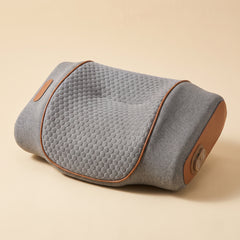
That moment, the one where the day is over but your body hasn’t noticed yet, is exactly what we designed Avoria for. Lie back, let soothing heat spread along the back of your neck, add gentle vibration if you like, and let the pillow’s contoured shape hold you while you finally do nothing at all.