Linda Woke Up Stiff Every Morning. Her Pillow Was Part of the Story
For months, Linda started every day unable to turn her head. A story about sleep, pillows and the mornings she got back.

Linda is 52, a high-school teacher, and for most of last year her mornings started the same way: alarm, a long stretch, and a sharp reminder that she couldn’t quite turn her head to the left. “I’d go to bed feeling fine and wake up feeling like I’d slept in a suitcase,” she says.
Key takeaways
- Hours in one position overnight can leave your neck feeling stiff in the morning.
- A flat, folded or stacked pillow is a common sign your setup needs a rethink.
- Aim to keep your head roughly in line with your spine while you rest.
Mornings on autopilot
Linda’s mornings are fast. Coffee, lunch for her son, papers to grade in the car while she waits at the school gate. For months she drove with her whole upper body turning at junctions because her neck wouldn’t. Her students noticed before she did. “One of them asked if I’d hurt myself,” she laughs. “I said no, I just slept funny. Every night.”
By third period the stiffness usually eased. By evening she forgot about it. And the next morning, there it was again. “I just accepted it as part of getting older,” she says. It took her a long time to realize the problem might be happening while she slept.
The pillow she never questioned
Linda had the same pillow for years. It had gone flat, so she folded it in half. When that wasn’t enough, she added a second one on top. Some nights she ended up on her stomach with her head turned to one side for hours.
“I spent money on a new mattress and never once thought about my pillow,” she laughs. “And it was the thing my neck was lying on all night.”
A typical night, looking back
When Linda finally sat down and thought about her nights, the pattern was obvious. She went to bed late, usually after grading papers propped up against the headboard with her chin tucked toward her chest. She’d fall asleep on her back, roll onto her stomach some time after midnight, and wake at 3 a.m. with one arm numb and her face pressed into the folded pillow. Then she’d turn over again, and again, trying to find a position that felt right.
“I was basically doing gymnastics all night,” she says. “No wonder I woke up feeling like I’d done a workout.” None of it was dramatic. There was no injury, no single bad night she could point to. It was simply hundreds of hours, month after month, in positions that left her neck bent and twisted for far too long.
Her husband had noticed too. He’d hear her shifting and sighing in the dark, and in the mornings he’d watch her roll her shoulders over the coffee machine. “He kept telling me to get a new pillow,” she says. “I kept telling him I’d look into it. For about a year.”
Signs your setup needs a rethink
- You fold or stack your pillow to get comfortable.
- Your pillow has gone flat or lumpy and no longer bounces back.
- You sleep on your stomach with your head turned for hours.
- You wake up stiff more often than not.
What good support looks like
Whether you sleep on your back or your side, the idea is the same: keep your head roughly in line with your spine so your neck isn’t bent up, down or sideways all night. Back sleepers usually feel best with support under the curve of the neck. Side sleepers need enough height to fill the space between shoulder and ear.
Linda replaced her old pillow and started paying attention to how she settled into bed. But the change she talks about most happened before she even turned the light off.
The habits around bedtime
Once she started paying attention, Linda realized her pillow wasn’t the only thing that needed a rethink. The hour before bed mattered too.
- Grading moved to the kitchen table. No more papers in bed with her head bent forward for an hour.
- Phone on the dresser, not on the pillow next to her, so she wasn’t lying on her side scrolling until midnight.
- A slightly cooler, darker room, which made it easier to fall asleep before the tossing started.
- The same bedtime most nights, even on Fridays, so her body knew what to expect.
“None of these were big changes,” she says. “But together they meant I went to bed calmer, and I think I moved around less during the night.”
Starting the night in the right position
She began spending a few minutes each evening lying on her back with proper support under her neck, warmth on, lights low. “It’s like my neck finally remembered what straight feels like,” she says. Then she’d switch to her regular pillow and sleep.
Some evenings she listens to a podcast while she lies there. On others she simply closes her eyes and lets the warmth do its work. When the session switches itself off, she knows it’s time to sleep.
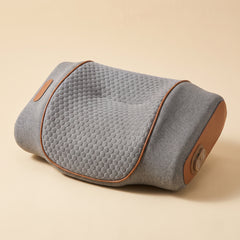
That evening moment is where Avoria fits in. Lie back, choose the air traction height that suits you, let soothing heat ease the day out of your shoulders, and give your neck a few minutes of real support before you drift off.
What she’d tell a friend
A colleague at school recently mentioned that she’d been waking up with a sore neck. Linda laughed and pulled up a chair. “I told her: before you blame your age, look at what you’re sleeping on, and look at the hour before you go to bed.”
Her advice is simple. Notice how you actually sleep, not how you think you sleep. If you’re folding, stacking or punching your pillow into shape every night, that’s your body telling you something. Give your neck a few minutes of proper support before you turn the lights off, so you start the night in a good position instead of fighting for one at 3 a.m. And if stiffness keeps coming back, or it comes with pain, numbness or headaches, don’t just put up with it. Talk to a professional.
“I spent a year thinking it was normal,” she says. “It wasn’t. It was just familiar.”
Her bedtime now
These days Linda’s evening has a shape. Papers graded at the kitchen table, not in bed. A warm shower. Ten quiet minutes on her back with the lamp low, then lights out. She still has the occasional stiff morning, especially after a long week. But they’re the exception now, not the rule, and she can check her blind spot again without turning her whole body.